SETU
SETU
Child Rights Training and Resource Centre (CRTRC)
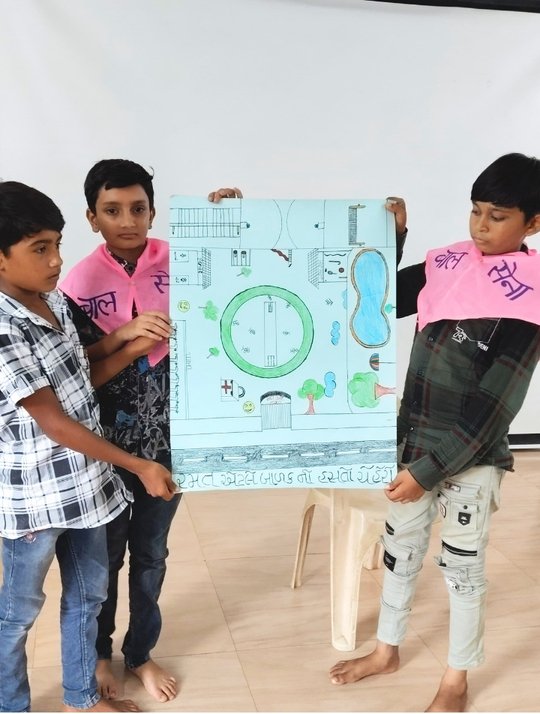
SETU, meaning “bridge,” is Shaishav’s Child Rights Training and Resource Centre (CRTRC), established to bridge the gap between expertise and educational resources for children and those who need them. With over three decades of grassroots experience in Bhavnagar’s marginalised communities, Shaishav has developed a rich collection of educational materials, curricula, and training manuals covering a range of topics, including academics, life skills, adolescent awareness, child rights, the environment, and more. Having tested them first-hand through our grassroots work and seen their impact, Shaishav is committed to making these resources accessible to children and educators everywhere. The organisation also conducts workshops and training programmes for educators, grassroots professionals, and other organisations. These sessions equip participants with practical, transformative tools that enhance their ability to create meaningful, lasting impacts on children’s lives.
The Issue
Access to quality education remains a significant challenge for children from disadvantaged communities. Mainstream education systems are often overcrowded, understaffed, and unable to deliver a quality education that meet children’s needs or engages them meaningfully. As a result, many struggle to stay in school, and those who do graduate often have a weak foundation in academics and essential skills, leaving them inadequately equipped to compete as equals in the real world, ultimately limiting their aspirations and reinforcing cycles of poverty and inequality.
SETU was set up with the intention of making child-centric resources accessible to all those who need them and to simultaneously build a cadre of trained professionals capable of working with children through a rigs-based, child-centric, and participatory approach.
Play-Based Learning Resources
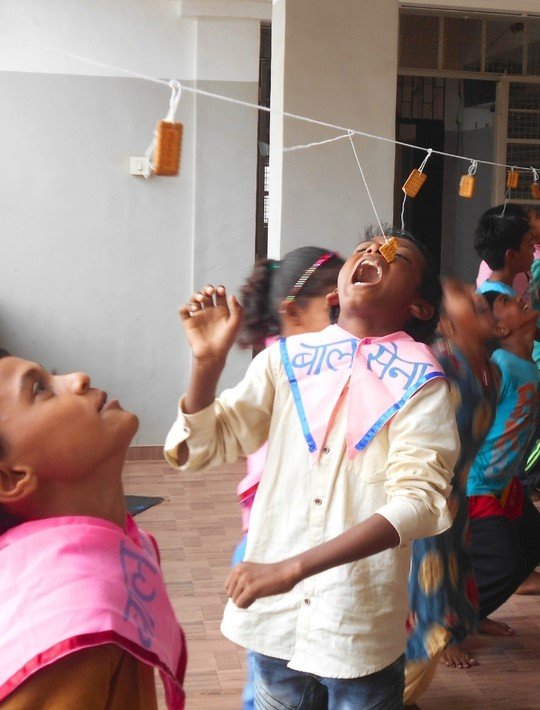
Over the years, Shaishav has found that play is a powerful tool for learning, helping children develop life skills, enhance cognitive abilities, and retain knowledge more effectively. Over the years, Shaishav has developed a range of interactive resources that integrate play with learning, ensuring that children grasp vital concepts in an enjoyable and impactful way. These resources empower children to build confidence, think critically, and strengthen their academic foundation, ultimately empowering them to chart out their own future paths and participate as equals in the outside world.
A unique feature of SETU is that most of its materials are co-created with children through participatory action research, allowing them to identify their own needs and actively shape solutions. Moreover, all resources are rigorously tested by grassroots facilitators and refined based on direct feedback, ensuring their relevance and effectiveness.
Key Components of SETU
- Resource Development
Resource development is a core strength of Shaishav. We already have a vast collection of demand-driven resources and are also continuously creating new materials to adapt to the changing times and the evolving needs of children. We seek to make existing tools, materials, and best practices widely accessible, while also continuously updating and creating new resources to address the changing needs of children. - Training
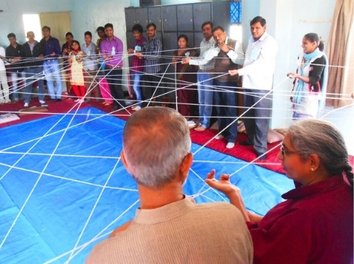
Shaishav collaborates with like-minded organisations to provide specialised training on how to effectively use our resources for the benefit of children everywhere. Our Training of Trainers (ToT) programme aims to build a cadre of professionals who can implement child-centric, participatory models and train others in their regions to benefit more children. - Action Research
Our action research involves using findings to develop actionable steps, directly reinforcing our grassroots work. Through findings from our research, we develop need-based resources informed by direct feedback from children. We also facilitate Participatory Action Research (PAR), wherein children themselves lead research on issues that affect them and develop solutions, using child-friendly data collection and analysis tools and methods. - Macro-level Networking
Our grassroots work enables us to advocate for children’s best interests in policy discussions. Shaishav actively participates in various state, national, regional, and international networks. We co-founded the Child Rights Collective Gujarat in 2003, which later evolved into the Gujarat Bal Manch in 2015, a federation of children’s collectives. Our founder also serves on the Executive Committee of the National Action and Coordination Group to End Violence Against Children (NACG-EVAC) in South Asia. Additionally, she is a National Board Member of the Campaign Against Child Labour (CACL) and the RTE Forum and actively participates in networks like Young Voices, Catalyst 2023, Ashoka, and Aspire. Shaishav continues to stay connected with organisations and individuals, sharing insights and collaborating on child-centred, holistic education. - Documentation
SETU Resources - A Sneak Preview
SETU resources comprise a variety of books, interactive games, educational materials, and practical tools and manuals. These resources are continually updated to address the evolving needs of children and communities across various contexts. These resources are broadly classified into the following categories:
Child Rights and Safety
- Child Rights Games to help children understand their rights.
- Audit tools enabling children to lead research and audits on topics like child rights, safety, child-friendly spaces, hygiene, etc.
Adolescent Awareness and Life Skills
- A complete adolescent education course with modules covering a comprehensive range of topics like gender, puberty, menstruation, sexual abuse, and healthy relationships.
- Life Skills resources focusing on problem-solving, decision-making, stress management, including translations from English to Gujarati.
Science, Geography, and Environment
- Environmental Games and stories on water conservation, waste segregation, water pollution, and garbage management.
- Geography resources, including maps, puzzles, and lessons on Indian history.
- Science experiments on topics like motion, waves, anatomy, and scientific toys.
- Workbooks for Kindergarten to 3rd grade covering environment, math, and language.
Creative and Cognitive Development
- Craft Activities like origami, paper crafts, and making scientific toys.
- Brain Games including magic tricks, puzzles, and thinking activities.
- Journaling and reflection tools for personal development and self-reflection.
Health & Nutrition
- Health and nutrition awareness resources on junk food and healthy lifestyle choices.
Teaching Resources
- Teaching Manuals for educators on life skills, child rights, gender equality, and healthy relationships
Miscellaneous Tools and Games
- Interactive Board Games, creative exploration activities, and thinking games like puzzles and challenges to enhance cognitive development.
Bal Dost Fellowship (launching soon)
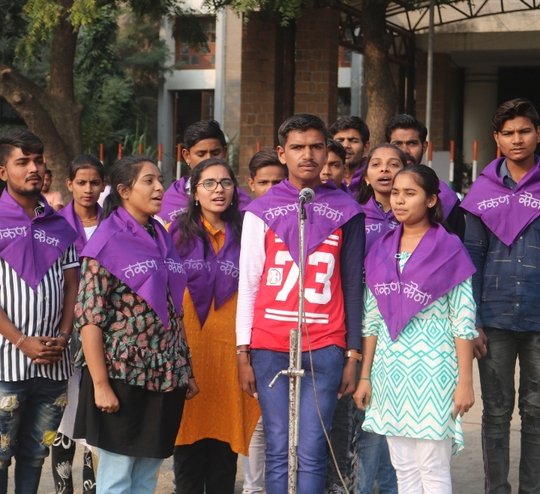
The Baldost Fellowship (2026–28) is a 2-year full-time program that begins with 8–10 weeks of intensive training, followed by 21 months of community-based work in Aashramshalas, Anganwadis, and villages. Fellows will facilitate Foundational Literacy & Numeracy (FLN), promote life skills and mental well-being, strengthen understanding of child rights and entitlements, and support adolescent empowerment and protection. The first cohort will comprise 20 fellows working across 20 villages and Aashramshalas, with ongoing training and mentoring throughout the journey.
In the long term, Baldosts will emerge as passionate enablers of this vision—strengthening local systems through active child participation, reducing risky behaviours among children, and integrating the Baldost model into public policies like ICDS and ICPS. The model aims to be scalable and globally replicable through networks such as Ashoka and Catalyst 2030, ultimately building stronger, more inclusive communities where every child’s rights and well-being are safeguarded.